|
[ grid view ]
|
 |
Title - Author. Subject. X pages.
"" |
-->
|
2014:
|
||
| Mar. 4, 2014 | 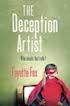 |
The Deception Artist - Fayette Fox. Friend's book. 264 pages.
"Who needs the truth? Eight-year-old Ivy has a vivid imagination and tells lies so that people will like her. With her brother, Brice, in hospital, life at home feels unsettled and things become even more strained after her father loses his job, along with his sense of purpose. Ivy's parents might divorce and her best friend hates her but, ever creative, she abandons her escapist fantasies and determines to uncover the truth." |
| Feb. 12, 2014 | 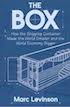 |
The Box - Marc Levinson. Industrial history.
"How the shipping container made the world smaller and the world economy bigger." |
| Jan. 21, 2014 | 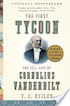 |
The First Tycoon - T.J. Stiles. Biography. 571 pages.
"The story of Cornelius “Commodore” Vanderbilt, the combative man and American icon who, through his genius and force of will, did more than perhaps any other individual to create modern capitalism." |
|
2013:
|
||
| Dec. 9, 2013 | 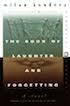 |
The Book of Laughter and Forgetting - Milan Kundera. Fiction.
"In seven interwoven stories, different aspects of human existence are magnified and reduced, reordered and emphasized, newly examined, analyzed, and experienced. " |
|
2012:
|
||
| Mar. 11, 2012 | 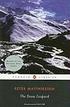 |
The Snow Leopard - Peter Matthiessen. Travel journal, life quest. 318 pages.
"In 1973, Peter Matthiessen and field biologist George Schaller traveled high into the remote mountains of Nepal to study the Himalayan blue sheep and possibly glimpse the rare and beautiful snow leopard. As the climb proceeds, Matthiessen charts his inner path as well as his outer one, with a deepening Buddhist understanding of reality, suffering, impermanence, and beauty." |
|
2011:
|
||
| Dec. 18, 2011 | 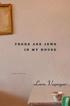 |
There are Jews in My House - Lara Vapnyar. Short stories. 149 pages.
Vapnyar, a recent Russian emigrant, dramatizes an evocative array of Russian and Russian American experiences in six neatly constructed and emotionally intricate short stories. |
|
In Progress:
|
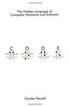 |
Code: The Hidden Language of Computer Hardware and Software - Charles Petzold. Technology. 382 pages.
"What do flashlights, the British invasion, black cats, and seesaws have to do with computers? In Code, they show us the ingenious ways we manipulate language and invent new means of communicating with each other. And through Code, we see how this ingenuity and our very human compulsion to communicate have driven the technological innovations of the past two centuries." |
| Nov. 22, 2011 | 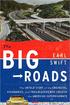 |
The Big Roads: The Untold Story of the Engineers, Visionaries, and Trailblazers Who Created the American Superhighways - Earl Swift. History. 324 pages.
"A man-made wonder, a connective network, an economic force, a bringer of blight and sprawl and the possibility escape--the U.S. interstate system changed the face of our country. This story charts the creation of these essential American highways." |
|
In Progress:
|
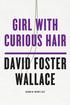 |
Girl With Curious Hair - David Foster Wallace. Short stories. 373 pages.
"Alex Trebek goes around the 'JEOPARDY!' studio wearing a button that says PAT SAJAK LOOKS LIKE A BADGER. He and Sajak play racquetball every Thursday." |
| Aug. 14, 2011 | 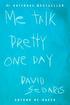 |
Me Talk Pretty One Day - David Sedaris. Comedy. 272 pages.
"A recent transplant to Paris, humorist David Sedaris presents an irreverant collection of stories about his life, including the title story about his strained attempts to learn French." |
| Jul. 29, 2011 |  |
Tropic of Cancer - Henry Miller. Fiction. 318 pages.
"A mixture of memoir and fiction which chronicles with unapologetic gusto the bawdy adventures of a young expatriate writer, his friends, and the characters they meet in Paris in the 1930s." |
| Jun. 19, 2011 | 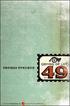 |
The Crying of Lot 49 - Thomas Pynchon. Fiction. 152 pages.
"Oedipa Maas is made the executor of the estate of her late boyfriend, Pierce Inverarity. As she diligently carries out her duties, Oedipa is enmeshed in what would appear to be a worldwide conspiracy, meets some extremely interesting characters, and attains a not-inconsiderable amount of self-knowledge." |
| Apr. 23, 2011 | 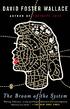 |
The Broom of the System - David Foster Wallace. Fiction. 467 pages.
"The year is 1990 and the place is a slightly altered Cleveland, Ohio, which sits on the edge of the Great Ohio Desert. Lenore Beadsman works as a switchboard attendant at a publishing firm. Her great-grandmother, a one-time student of Wittgenstein, has disappeared with twenty-five other inmates of the Shaker Heights Nursing Home. Her beau (and boss), editor-in-chief Rick Vigorous, is insanely jealous. And her cockatiel, Vlad the Impaler, has suddenly started spouting a mixture of psychobabble, Auden, and the King James Bible, which may propel him to stardom on a fundamentalist Christian television program." |
| Apr. 7, 2011 | 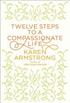 |
Twelve Steps to a Compassionate Life - Karen Armstrong. Philosophy. 193 pages.
"Tells the full and profound story of altruism throughout human history and the history of the Golden Rule, the essence of compassion and the kernel of every religious tradition." |
| Mar. 29, 2011 | 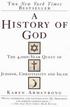 |
A History of God - Karen Armstrong. History. 399 pages.
"Traces the history of how men and women have perceived and experienced God, from the time of Abraham to the present. From classical philsophy and medieval mysticism to the Reformation, the Enlightenment, and the modern age of skepticism, Karen Armstrong distills the intellectual history of monotheism into a single, comprehensive volume." |
| Feb. 22, 2011 | 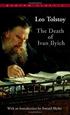 |
The Death of Ivan Ilyich - Leo Tolstoy. Fiction. 113 pages.
"The story of a high court judge who has never given the inevitability of his dying so much as a passing thought. But one day death announces itself to him, and he is brought face-to-face with his own mortality." |
| Feb. 16, 2011 | 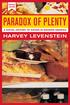 |
Paradox of Plenty: A Social History of Eating in Modern America - Harvey Levenstein. History. 267 pages.
"Explores the economic, political, and cultural factors that have influenced the American diet and the role that major food processors, the medical establishment, and the American government have played in modifying the taste buds and nutritional ideas of its citizens." |
|
2010:
|
||
| Dec. 21, 2010 |  |
The Sun Also Rises - Ernest Hemingway. Fiction. 251 pages.
"A look at the disillusionment and angst of the post-World War I generation." |
| Dec. 17, 2010 |  |
Traffic: Why We Drive the Way We Do - Tom Vanderbilt. Pop psychology. 286 pages.
"A look at the psychology of driving and the many false impressions drivers use to operate their vehicles." |
| Nov. 26, 2010 |  |
Death of the Banker - Ron Chernow. History. 130 pages.
"Examines the forces that made some dynasties like the Morgans, the Warburgs, and the Rothschilds the financial arbiters of the early twentieth century and then rendered them virtually obsolete by the century's end." |
| Nov. 21, 2010 |  |
Alexander Hamilton - Ron Chernow. Biography. 731 pages.
"Alexander Hamilton was one of the seminal figures in our history. His richly dramatic saga is nothing less than a riveting account of America's founding, from the Revolutionary War to the rise of the first federal government." |
| Sep. 18, 2010 | 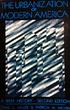 |
The Urbanization of Modern America - Zane Miller, Patricia Melvin. History. 252 pages.
"American cities at any point in time look astonishingly diverse. Yet by focusing on common patterns of internal growth and on the relationship between cities and larger society, we can organize American urban history and distinguish phases in the discourse about American urban culture and what it might be or become." |
| Jun. 11, 2010 | 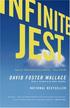 |
Infinite Jest - David Foster Wallace. Fiction. 981 pages.
"An epic story of tennis, substance addiction, depression, child abuse, family relationships, advertising, film theory, and Quebec separatism." |
| Jan. 28, 2010 | 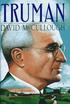 |
Truman - David McCullough. Biography. 992 pages.
"The life and times of the thirty-third President of the United States, Truman provides a deeply moving look at an extraordinary, singular American. From Truman's small-town, turn-of-the-century boyhood and his transforming experience in the face of war in 1918, to his political beginnings in the powerful Pendergast machine and his rapid rise to prominence in the U.S. Senate, McCullough shows a man of uncommon vitality and strength of character." |
|
In Progress:
|
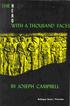 |
The Hero With A Thousand Faces - Joseph Campbell. Mythology / Psychology. 391 pages.
"Despite their infinite variety of incident, setting, and costume, the myths of the world offer only a limited number of responses to the riddle of life. Numerous protagonists of folklore and religion enact simultaneously the various phases of their common story. From behind a thousand faces the single hero emerges, archetype of all myth." |
2009:
|
| Dec. 15, 2009 | 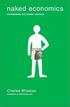 |
Naked Economics: Undressing the Dismal Science - Charles Wheelan. Economics. 236 pages.
"Ever wonder what it means when the Fed raises interest rates? Or why there are occasional fears of inflation? To the rescue comes this simplified and chatty nontextbook textbook." |
| Dec. 7, 2009 | 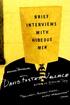 |
Brief Interviews With Hideous Men - David Foster Wallace. Fiction. 321 pages.
"Wallace offers a dense, cerebral, and self-reflexive set of short works.... While the inauthenticity of male/female relations is a recurrent motif, the central theme is the nature of narrative itself, as in "Octet," where the author turns self-reflexiveness on itself, creating something that might be termed meta-meta-fiction." |
| Nov. 16, 2009 | 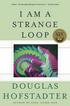 |
I Am a Strange Loop - Douglas Hofstadter. Theory of Mind. 363 pages.
"Eschewing the study of biological processes as inadequate to understanding consciousness, Hofstadter argues that the phenomenon of self-awareness is best explained by an abstract model based on symbols and self-referential 'loops', which, as they accumulate experiences, create high-level consciousness." |
| Oct. 30, 2009 | 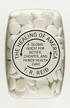 |
The Healing of America: A Global Quest for Better, Cheaper, and Fairer Health Care - T. R. Reid. Journalistic Inquiry. 256 pages.
"In his global quest to find a possible prescription, Reid visits wealthy, free market, industrialized democracies like our own where he finds inspiration in example. Reid shares evidence from doctors, government officials, health care experts, and patients the world over." |
| Dec. 15, 2009 | 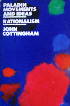 |
Rationalism - John Cottingham. Philosophy. 152 pages.
"Rationalism affirms the power of reason to uncover the structure of reality. This book is an account of philosophical rationalism, which, with empiricism, forms one of the two great pillars of Western thought." |
| Oct. 18, 2009 |  |
The Alchemist - Paulo Coelho. Fiction. 167 pages.
"The story of Santiago, an Andalusian shepherd boy who yearns to travel in search of a worldly treasure as extravagant as any ever found. From his home in Spain he journeys to the markets of Tangiers and across the Egyptian desert to a fateful encounter with the alchemist." |
| Sep. 30, 2009 | 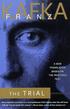 |
The Trial - Franz Kafka. Fiction. 266 pages.
"The tale of Josef K., a respectable bank officer who is suddenly and inexplicably arrested and must defend himself against a charge about which he can get no information." |
| Sep. 27, 2009 | 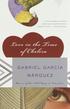 |
Love in the Time of Cholera - Gabriel García Márquez. Fiction. 348 pages.
"An evocation of an unrequited passion so strong that it binds three people's lives together for more than fifty years." |
| Aug. 2, 2009 | 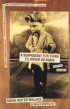 |
A Supposedly Fun Thing I'll Never Do Again - David Foster Wallace. Essays. 353 pages.
"A collection of seven pieces on subjects ranging from television to tennis, from the Illinois State Fair to the films of David Lynch, from postmodern literary theory to the supposed fun of traveling aboard a Carribean cruiseliner." |
| Jul. 11, 2009 | 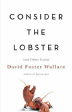 |
Consider the Lobster - David Foster Wallace. Essays. 343 pages.
"Do lobsters feel pain? Did Franz Kafka have a funny bone? What is John Updike's deal anyway? Whether covering the three-ring circus of a vicious presidential race, plunging into wars between dictionary writers, or confronting the World's Largest Lobster Cooker, Wallace projects a quality of thought that is uniquely his and a voice as powerful and distinct as any in American letters." |
| Oct. 13, 2009 | 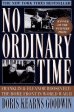 |
No Ordinary Time: Franklin & Eleanor Roosevelt: The Home Front In Word War II - Doris Kearns Goodwin. History. 636 pages.
"A compelling chronicle of a nation and its leaders during the period when modern America was created. With an uncanny feel for detail and a novelist's grasp of drama and depth, Doris Kearns Goodwin brilliantly narrates the interrelationship between the inner workings of the Roosevelt White House and the destiny of the United States." |
| Mar. 22, 2009 | 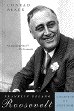 |
Franklin Delano Roosevelt: Champion of Freedom - Conrad Black. Biography. 1,134 pages.
"In a very real way, FDR shaped the political realities of the U.S. for two generations. The establishment of the modern welfare state, the restructuring of the political parties, the alliance structures in World War II, the misjudgements about De Gaulle and France and Stalin and the Soviet Union -- all stem from FDR's judgements and decisions. Black helps us to recollect his seminal influence on our lives as a politician and a policy maker." |
|
2008:
|
||
| Dec. 22, 2008 | 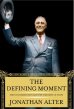 |
The Defining Moment: FDR's Hundred Days and the Triumph of Hope - Jonathan Alter. History. 347 pages.
"Newsweek senior editor Alter attempts to explore FDR's famous first 'hundred days' in office, when the president laid the foundation for national recovery from the Great Depression." |
| Dec. 1, 2008 | 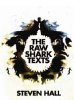 |
The Raw Shark Texts - Steven Hall. Fiction. 428 pages.
"Hall's debut novel pits corporeal man against metaphysical sharks that devour memory and essence, not flesh and blood. When Eric Sanderson wakes from a lengthy unconsciousness, he has no memory. A letter from 'The First Eric Sanderson' directs him to psychologist Dr. Randle, who tells Eric he is afflicted with a 'dissociative condition.' Eric learns about his former life and is soon on the run from the Ludovician, a 'species of purely conceptual fish' that feeds on human memories and the intrinsic sense of self." |
| Nov. 18, 2008 | 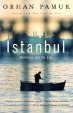 |
Istanbul: Memories and the City - Orhan Pamuk. Memoir. 368 pages.
"A shimmering evocation of one of the world's great cities, by its foremost writer. Orhan Pamuk was born in Istanbul and still lives in the family apartment building where his mother first held him in her arms. His portrait of his city is thus also a self-portrait, refracted by memory and the melancholy that all Istanbullus share: the sadness that comes of living amid the ruins of a lost empire." |
| Nov. 6, 2008 |  |
Political Ideologies: An Introduction - Andrew Heywood. Political Science. 324 pages.
"Andrew Heywood provides a clear and accessible introduction to the political creeds and doctrines that have dominated and shaped world politics over the last 200 years." |
| Oct. 16, 2008 | 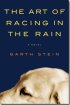 |
The Art of Racing in the Rain - Garth Stein. Fiction. 321 pages.
"Enzo knows he is different from other dogs: a philosopher with a nearly human soul (and an obsession with opposable thumbs), he has educated himself by watching television extensively, and by listening very closely to the words of his master, Denny Swift, an up-and-coming race car driver." |
| Oct. 10, 2008 | 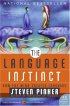 |
The Language Instinct: How the Mind Creates Language - Steven Pinker. Linguistics. 448 pages.
"Pinker, a respected cognitive scientist at MIT, has given the nonstudent a bridge into the interesting yet still controversial world of linguistics and cognitive science. Here, under a rather heavy Chomsky influence, Pinker discusses how language evolved, how children acquire and develop language skills, and why the English language and its spelling aren't as nonlogical as critics have claimed." |
| Aug. 8, 2008 |  |
The Ethics of What We Eat: Why Our Food Choices Matter - Peter Singer, Jim Mason. Food Ethics. 284 pages.
"Peter Singer and Jim Mason set their critical sights on the food we buy and eat: where it comes from, how it is produced, and whether it was raised humanely. The narrative explores the impact our food choices have on humans, animals, and the environment. " |
|
In Progress:
|
 |
Existentialism from Dostoevsky to Sartre - Walter Kaufmann. Philosophy. 315 pages.
"What is Existentialism? It is perhaps the most misunderstood of modern philosophic positions. Existentialism is a timeless sensibility that can be discerned here and there in the past; but it is only in recent times that it has hardened into a sustained protest and preoccupation." |
| Jun. 26, 2008 |  |
The Omnivore's Dilemma: A Natural History of Four Meals - Michael Pollan. Food Journalism. 411 pages.
"'What should we have for dinner?' To one degree or another this simple question assails any creature faced with a wide choice of things to eat. Anthropologists call it the omnivore's dilemma. The cornucopia of the modern American supermarket and fast-food outlet has thrown us back on a bewildering landscape where we once again have to worry about which of those tasty-looking morsels might kill us. At the same time we're realizing that our food choices also have profound implications for the health of our environment. The Omnivore's Dilemma is an eye-opening exploration of these little-known but vitally important dimensions of eating in America. " |
| May 14, 2008 |  |
Zen and the Art of Motorcycle Maintenance: An Inquiry Into Values - Robert Pirsig. Philosophy. 540 pages.
"A powerful, moving, and penetrating examination of how we live and a breathtaking meditation on how to live better. Here is the book that transformed a generation: an unforgettable narration of a summer motorcycle trip across America's Northwest, undertaken by a father and his young son. A story of love and fear that becomes a profound personal and philosophical odyssey into life's fundamental questions, this uniquely exhilarating modern classic is both touching and transcendent, resonant with the myriad confusions of existence and the small, essential triumphs that propel us forward." |
| Apr. 17, 2008 | 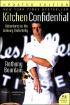 |
Kitchen Confidential - Anthony Bourdain. Kitchen Expose. 319 pages.
"Chef at New York's Les Halles and author of Bone in the Throat, Bourdain pulls no punches in this memoir of his years in the restaurant business. His fast-lane personality and glee in recounting sophomoric kitchen pranks might be unbearable were it not for two things: Bourdain is as unsparingly acerbic with himself as he is with others, and he exhibits a sincere and profound love of good food." |
| Mar. 31, 2008 | 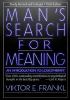 |
Man's Search For Meaning - Viktor Frankl. Psychiatry. 154 pages.
"Man's Search for Meaning by Viktor E. Frankl is among the most influential works of psychiatric literature since Freud. The book begins with a lengthy, austere, and deeply moving personal essay about Frankl's imprisonment in Auschwitz and other concentration camps for five years, and his struggle during this time to find reasons to live. The second part of the book, called "Logotherapy in a Nutshell," describes the psychotherapeutic method that Frankl pioneered as a result of his experiences in the concentration camps." |
| Mar. 20, 2008 | 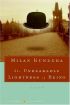 |
The Unbearable Lightness of Being - Milan Kundera. Fiction. 314 pages.
"A young woman in love with a man torn between his love for her and his incorrigible womanizing; one of his mistresses and her humbly faithful lover -- these are the two couples whose story is told in this masterful novel. In a world in which lives are shaped by irrevocable choices and by fortuitous events, a world in which everything occurs but once, existence seems to lose its substance, its weight. Hence, we feel "the unbearable lightness of being" not only as the consequence of our pristine actions but also in the public sphere, and the two inevitably intertwine." |
| Mar. 6, 2008 | 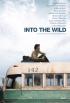 |
Into the Wild - Jon Krakauer. Non-fiction. 203 pages.
"After graduating from Emory University in 1992, Christopher McCandless abandoned his possessions, gave his entire $24,000 savings to charity and hitchhiked to Alaska, where he went to live in the wilderness. Four months later, he turned up dead. His diary and letters and two notes found at a remote campsite tell of his desperate effort to survive. They also reflect the posturing of a confused young man, raised in affluent Annandale, Va., who self-consciously adopted a Tolstoyan renunciation of wealth and return to nature." |
| Feb. 29, 2008 |  |
In a Sunburned Country - Bill Bryson. Travel Memoir. 331 pages.
"This travel narrative from veteran wanderer Bryson provides an appreciative, informative, and hilarious portrait of the land Down Under: a place harsh and hostile to life, staggeringly empty yet packed with stuff. Bryson is a real traveler, the kind of guy who can be entertained by (and be entertaining about) a featureless landscape scattered with rocks the color of bad teeth. Fortunately for him and for us, there's a lot more to Australia than that." |
| Feb. 19, 2008 |  |
Arabian Sands - Wilfred Thesiger. Travel Memoir. 330 pages.
"Wilfred Thesiger spent five years exploring in and around the vast, waterless desert, the 'Empty Quarter' of Arabia. Travelling amongst the Bedu people, he experienced the everyday challenges of hunger and thirst, the trials of long marches beneath the relentless sun, the bitterly cold nights and the constant danger of death if it was discovered he was a Christian 'infidel'. He was the first European to visit most of the region, and just before he left the area the process that would change it forever had begun-the discovery of oil. Thesiger saw Arabian Sands as 'a memorial to a vanished past, a tribute to a once magnificent people'." |
| Jan. 27, 2008 |  |
The Places In Between - Rory Stewart. Travel Memoir. 297 pages.
"In January 2002 Rory Stewart walked across Afghanistan-surviving by his wits, his knowledge of Persian dialects and Muslim customs, and the kindness of strangers. Through these encounters-by turns touching, con-founding, surprising, and funny-Stewart makes tangible the forces of tradition, ideology, and allegiance that shape life in the map's countless places in between." |
| Jan. 3, 2008 |  |
The Prize: The Epic Quest for Oil, Money, and Power - Daniel Yergin. History. 788 pages.
"Founded in the 19th century, the oil industry began producing kerosene for lamps and progressed to gasoline. Huge personal fortunes arose from it, and whole nations sprung out of the power politics of the oil wells. Yergin's fascinating account sweeps from early robber barons like John D. Rockefeller, to the oil crisis of the 1970s, through to the Gulf War." |
|
2007:
|
||
| Oct. 18, 2007 | 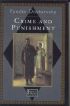 |
Crime and Punishment (Barnes & Noble Classics Edition) - Fyodor Dostoevsky. Fiction. 449 pages.
"A psychological analysis of the poor student Raskolnikov, whose theory that humanitarian ends justify evil means leads him to murder a St. Petersburg pawnbroker. The act produces nightmarish guilt in Raskolnikov. The narrative's feverish, compelling tone follows the twists and turns of Raskolnikov's emotions and elaborates his struggle with his conscience and his mounting sense of horror as he wanders the city's hot, crowded streets." |
| Sep. 24, 2007 | 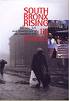 |
South Bronx Rising: The Rise, Fall, and Resurrection of an American City - Jill Jonnes. History. 440 pages.
"The definitive account of one of the great urban tragedies of the 1970s and 1980s: the near destruction of a large part of New York City through an epidemic of abandonment, vandalism, and arson. But even while the conflagration raged, determined citizens were trying to stop it." |
| Sep. 4, 2007 | 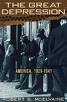 |
The Great Depression: America, 1929-1941 - Robert S. McElvaine. History. 349 pages.
"More than half a century has now passed since Franklin D. Roosevelt launched his "New Deal." Most Americans today are too young to remember the Great Depression. But no period in American history has more of importance to say to us now than does the Depression decade. Events in those years have determined the direction of our social and economic policies, our relationship to our government, and our political alignments ever since." |
| Aug. 2, 2007 | 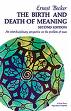 |
The Birth and Death of Meaning: An Interdisciplinary Perspective on the Problem of Man - Ernest Becker. Psychology / Anthropology. 199 pages.
"One curious thing that separates the social from the natural sciences is that the natural sciences, with much fanfare, immediately communicate to the general public their most exciting new ideas: the social sciences tend to nurse their significant insights in scholarly oblivion. As a result people feel that the social sciences are not doing anything important or exciting. But the opposite is true: probably the most thrilling and potentially liberating discoveries have been made in the fields of anthropology, sociology, psychology, and pyschiatry. The result is that we are today in possession of an excellent general theory of human nature, and this is what I want to reveal to the reader." |
| Feb. 16, 2007 |  |
When Genius Failed: The Rise and Fall of Long-Term Capital Management - Roger Lowenstein. Finance. 236 pages.
"When it was founded in 1993, Long-Term was hailed as the most impressive hedge fund in history. But after four years in which the firm dazzled Wall Street as a $100 billion moneymaking juggernaut, it suddenly suffered catastrophic losses that jeopardized not only the biggest banks on Wall Street but the stability of the financial system itself." |
| Jan. 31, 2007 |  |
Guns, Germs, and Steel: The Fates of Human Societies - Jared Diamond. History. 425 pages.
"In this 'artful, informative, and delightful' book, Jared Diamond convincingly argues that geographical and environmental factors shaped the modern world." |
|
2006:
|
||
| Jul. 11, 2006 |  |
The Wal-Mart Effect - Charles Fishman. Business Profile. 259 pages.
"Fishman takes us inside the carefully guarded workings of the "Wal-Mart ecosystem," where management surrender their lives and families, working 12 hours a day, six days a week, in a near-holy quest toward the never-ending goal of lower prices." |
| Mar. 8, 2006 |  |
The Undercover Economist - Tim Harford. Economics. 252 pages.
"The Undercover Economist is for anyone who's wondered why the gap between rich and poor nations is so great, or why he can't seem to find a decent second-hand car, or how to outwit Starbucks... Showing us the world through the eyes of an economist, Tim Harford reveals that everyday events are intricate games of negotiations, contests of strength, and battles of wits. " |
| Feb. 14, 2006 |  |
The Perfect Store: Inside eBay - Adam Cohen. Business Profile. 319 pages.
"The brief but startling history of eBay." |
|
2005:
|
||
| Nov. 11, 2005 | 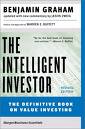 |
The Intelligent Investor - Benjamin Graham. Finance. 578 pages.
"The greatest investment advisor of the twentieth century, Benjamin Graham taught and inspired people worldwide. Graham's philosophy of "value investing" -- which shields investors from substantial error and teaches them to develop long-term strategies -- has made The Intelligent Investor the stock market bible ever since its original publication in 1949." |
| Oct. 6, 2005 | 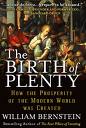 |
The Birth of Plenty: How the Prosperity of the Modern World Was Created - William Bernstein. Economic History. 386 pages.
"Not long after 1820, prosperity began flowing in an ever-increasing torrent; with each successive generation, the life of the son became observably more comfortable, informed, and predictable than that of the father. This book examines the nature, causes, and consequences of this transformation." |
| Sep. 5, 2005 |  |
The Denial of Death - Ernest Becker. Psychology/Philosophy. 285 pages.
"The culmination of a life's work, The Denial of Death is Ernest Becker's brilliant and impassioned answer to the 'why' of human existence. In bold contrast to the predominant Freudian school of thought, Becker tackles the problem of the vital lie--man's refusal to acknowledge his own mortality." |
| Aug. 19, 2005 | 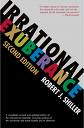 |
Irrational Exuberance (2nd ed.) - Robert Shiller. Economics. 230 pages.
"Robert J. Shiller, a respected expert on market volatility, offers an unconventional interpretation of recent U.S. stock market highs and shows that Alan Greenspan's term "irrational exuberance" is a good description of the mood behind the market." |
| Jun. 9, 2005 |  |
Courtroom 302: A Year Behind the Scenes in an American Criminal Courthouse - Steve Bogira. Journalism/Social Affairs. 416 pages.
"A wonderfully vivid portrait of a criminal courtroom in the nation's busiest courthouse, and of the cops and robbers, lawyers, judges, and assorted creatures of the law who arrive there." |
|
2004:
|
||
| Nov. 18, 2004 |  |
Shattered Hope: The Guatemalan Revolution and the United States, 1944-1954 - Piero Gleijeses. Political History. 394 pages.
"This study analyzes the history and downfall of what seems in retrospect to have been Guatemala's best government, the short-lived regime of Jacobo Arbenz, overthrown in 1954, by a CIA-orchestrated coup." |
| Jul. 24, 2004 |  |
An Unfinished Life: John F. Kennedy, 1917-1963 - Robert Dallek. Biography. 711 pages.
"An Unfinished Life is the first major, single-volume life of John F. Kennedy to be written by a historian in nearly four decades, drawing upon previously unavailable material and never-before-opened archives to tell Kennedy's story." |
| Apr. 13, 2004 |  |
One Hundred Years of Solitude - Gabriel Garcia Marquez. Fiction. 422 pages.
"The story of the rise and fall of the mythical town of Macondo through the history of the Buendia family. It is a rich and brilliant chronicle of life and death, and the tragicomedy of humankind." |
| Mar. 18, 2004 |  |
The Mole People: Life in the Tunnels Beneath New York City - Jennifer Toth. Journalism. 256 pages.
"Toth's firsthand account of the sad, bizarre subculture of people who live in New York's abandoned subway tunnels and sewage lines." |
| Mar. 14, 2004 |  |
1984 - George Orwell. Fiction. 267 pages.
"The great modern classic of 'Negative Utopia' - the gray world dominated by Big Brother and his vast network of agents suffocating freedom in a totalitarian world." |
| Mar. 23, 2004 |  |
Machiavelli: Selected Political Writings - David Wootton (Editor, Translator). Political Analysis. 217 pages.
"Described as a practical rule-book for the diplomat and a handbook of evil, this work provides an uncompromising picture of the true nature of power." |
| Abandoned | 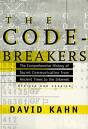 |
The Codebreakers: The Comprehensive History of Secret Communication from Ancient Times to the Internet - David Kahn. History. 984 pages.
"The magnificent, unrivaled history of codes and ciphers -- how they're made, how they're broken, and the many and fascinating roles they've played since the dawn of civilization in war, business, diplomacy, and espionage." |
| Feb. 12, 2004 | 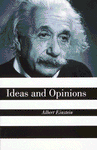 |
Ideas and Opinions - Albert Enstein. Personal Writings. 377 pages.
"Ideas and Opinions is the most definitive collection of Albert Einstein's popular writings, gathered under the supervision of Einstein himself. The selections cover works from his earliest days up to his death in 1955." |
| Jan. 27, 2004 | 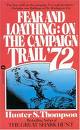 |
Fear and Loathing: On the Campaign Trail '72 - Hunter S. Thompson. Subjective Journalism. 505 pages.
"When a jackrabbit gets addicted to road-running, it is only a matter of time before he gets smashed--and when a journalist turns into a politics junkie he will sooner or later start raving and babbling in print about things that only a person who has Been There can possibly understand." |
| Jan. 18, 2004 | 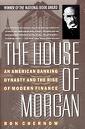 |
The House of Morgan: An American Banking Dynasty and the Rise of Modern Finance - Ron Chernow. History. 720 pages.
"Chernow vividly portrays the influence that the Morgan banks have had on the history of the Western economy since the late 18th century." |
|
2003:
|
||
| Dec. 12, 2003 |  |
Paris 1919: Six Months that Changed the World - Margaret MacMillan. History. 494 pages.
For six months in 1919, after the end of "the war to end all wars", the Big Three met in Paris to shape a lasting peace. Margaret MacMillan gives a dramatic and intimate view of those fateful days, which saw new political entities born out of the ruins of bankrupt empires, and the borders of the modern world redrawn. |
| Nov. 24, 2003 |  |
The Years of Lyndon Johnson: Means of Ascent - Robert Caro. Biography. 439 pages.
Second volume in a four volume biography. "No brief review does justice to the drama of the story Caro is telling, which is nothing less than how present-day politics was born." |
| Oct. 29, 2003 |  |
The Wind-Up Bird Chronicle - Haruki Murakami. Fiction. 607 pages.
"Toru Okada, the protagonist of this Japanese bildungsroman, is an utterly normal man to whom utterly abnormal things happen." |
| Oct. 20, 2003 |  |
The Cold War: A History - Martin Walker. History. 357 pages.
"A compact, provocative, and elegantly wrought history of the formative political event of our era." |
| Oct. 2, 2003 |  |
The Proud Tower: A Portrait of the World Before the War (1890-1914) - Barbara W. Tuchman. History. 463 pages.
"The fateful quarter-century leading up to the World War I was a time when the world of Privilege still existed in Olympian luxury and the world of Protest was 'heaving in its pain, its power, and its hate.' With an artist's selectivity, Tuchman bings to vivid life the people, places, and events that shaped the years leading up to the Great War." |
| Sep. 3, 2003 |  |
The Battle for God: a History of Fundamentalism - Karen Armstrong. History. 371 pages.
"Blending history, sociology, and spirituality, and writing with a deep understanding of human spirituality, Karen Armstrong provides a compelling and compassionate study of a radical form of religious expression that is critically shaping the course of world history." |
| Aug. 11, 2003 |  |
The First World War - John Keegan. History. 427 pages.
"The definitive story of the Great War, the war that created the modern world, unleashing the terrors of mechanized warfare and mass death, and establishing the political fault lines that imperil European stability to this day." |
| June 14, 2003 |  |
Les Misérables - Victor Hugo. Fiction. 1,463 pages.
"Sensational, dramatic and passionate, Les Misérables is not only superb adventure but a powerful social document. The story of Jean-Valjean, a convict struggling to escape his past, became a gospel of the poor and oppressed. " |
| May 7, 2003 |  |
One Hell of a Gamble: Khrushchev, Castro, and Kennedy 1958-1964 - Aleksandr Fursenko, Timothy Naftali. Political History. 355 pages.
"One of the best pieces of research to have emerged as a result of the opening of the Russian archives, a subtle, nuanced, and vivid history of the Cuban missile crisis." |
| May 2, 2003 |  |
Life of Pi - Yann Martel. Fiction. 354 pages. "Pi Patel, a young man from India, tells how he was shipwrecked and stranded in a lifeboat with a Bengal tiger for 227 days. This outlandish story is only the core of a deceptively complex three-part novel about, ultimately, memory as a narrative and about how we choose truths." |
| Apr. 17, 2003 | 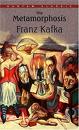 |
The Metamorphosis - Franz Kafka. Fiction (Novella). 60 pages.
"The story of a young man who, transformed overnight into a giant beetlelike insect, becomes an object of disgrace to his family, an outsider in his own home." |
| Feb. 18, 2003 | 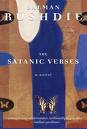 |
The Satanic Verses - Salman Rushdie. Fiction. 576 pages.
"[A story] about migration, metamorphosis, divided selves, love, death, London and Bombay." |
| Jan. 24, 2003 | 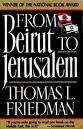 |
From Beiruit to Jerusalem - Thomas L. Friedman. Journalism/Middle East Affairs. 541 pages.
"Friedman, who twice garnered the Pulitzer as a New York Times correspondent in Lebanon and Israel, further delineates the two countries in this provocative, absorbing memoir cum political and social analysis" |
| Jan. 08, 2003 |  |
The First Salute - Barbara W. Tuchman. History. 458 pages.
"Two-time winner of the Pulitzer Prize and bestselling author Barbara W. Tuchman analyzes the American Revolution in a brilliantly original way, placing the war in the historical context of the centuries-long conflicts between England and both France and Holland." |
|
2002
|
||
| Dec. 28, 2002 | 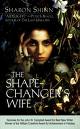 |
The Shape-Changer's Wife - Sharon Shinn. Fantasy. 224 pages.
"Caught up in his ambitions of becoming a master wizard, young Aubrey travels to a faraway land in search of the great shape-changer Glyrenden, from whom Aubrey hopes to discover the secret of lost spells and arcane magic." |
| Dec. 27, 2002 |  |
The Wizards of Armageddon - Fred Kaplan, Martin J. Sherwin. History/Political Science (nuclear policy). 460 pages.
"This is the untold story of the small group of men who have devised the plans and shaped the policies on how to use the Bomb. The book explores the secret world of these strategists and the nuclear age and brings to light a chapter in American political and military history never before revealed." |
| Nov. 21, 2002 | 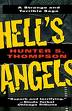 |
Hell's Angels: A Strange and Terrible Saga - Hunter S. Thompson. Subjective Journalism. 273 pages.
"Gonzo journalist and literary roustabout Hunter S. Thompson flies with the angels--Hell's Angels, that is. He's lived with them, he knows them and their machines, he speaks their langauge,and he reports it back to the world with all the fearsome force of a souped-up cyclone burning rubber." |
| Nov. 14, 2002 | 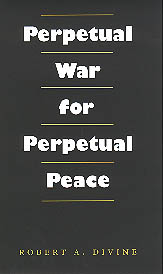 |
Perpetual War for Perpetural Peace - Robert A. Divine. Political Science. 124 pages.
"Americans consider themselves a peaceful people. Yet every generation since colonial times has taken part in war. Why? ... Distinguished diplomatic historian Robert A. Divine considers these questions in a thoughtful retrospective of the wars of the twentieth century." |
| Nov. 10, 2002 | 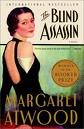 |
The Blind Assassin - Margaret Atwood. Fiction. 521 pages.
"Margaret Atwood's latest Booker Prize-winning novel is a mystery nested within a love story, nested within a century-spanning exploration of a woman's life." |
| Oct. 19, 2002 |  |
The Gulag Archipelago (Parts I and II) - Aleksandr Isaevich Solzhenitsyn (translator: Thomas P. Whitney). Subjective History. 672 pages.
"Drawing on his own incarceration and exile, as well as on evidence from more than 200 fellow prisoners and Soviet archives, Aleksandr I. Solzhenitsyn reveals the entire apparatus of Soviet repression -- the state within the state that ruled all-powerfully." |
| Aug. 30, 2002 | 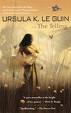 |
The Telling - Ursula K. Le Guin. Science Fiction. 246 pages.
"Le Guin's latest addition to her "Hainish" cycle (e.g., Rocannon's World) continues her exploration of human culture and society through the filter of the far future." |
| Aug. 28, 2002 |  |
A Peoples' Tragedy: The Russian Revolution: 1891-1924 - Orlando Figes. History. 960 pages.
"Vast in scope, exhaustive in original research, written with passion, narrative skill, and human sympathy, A People's Tragedy is a profound account of the Russian Revolution for a new generation." |